
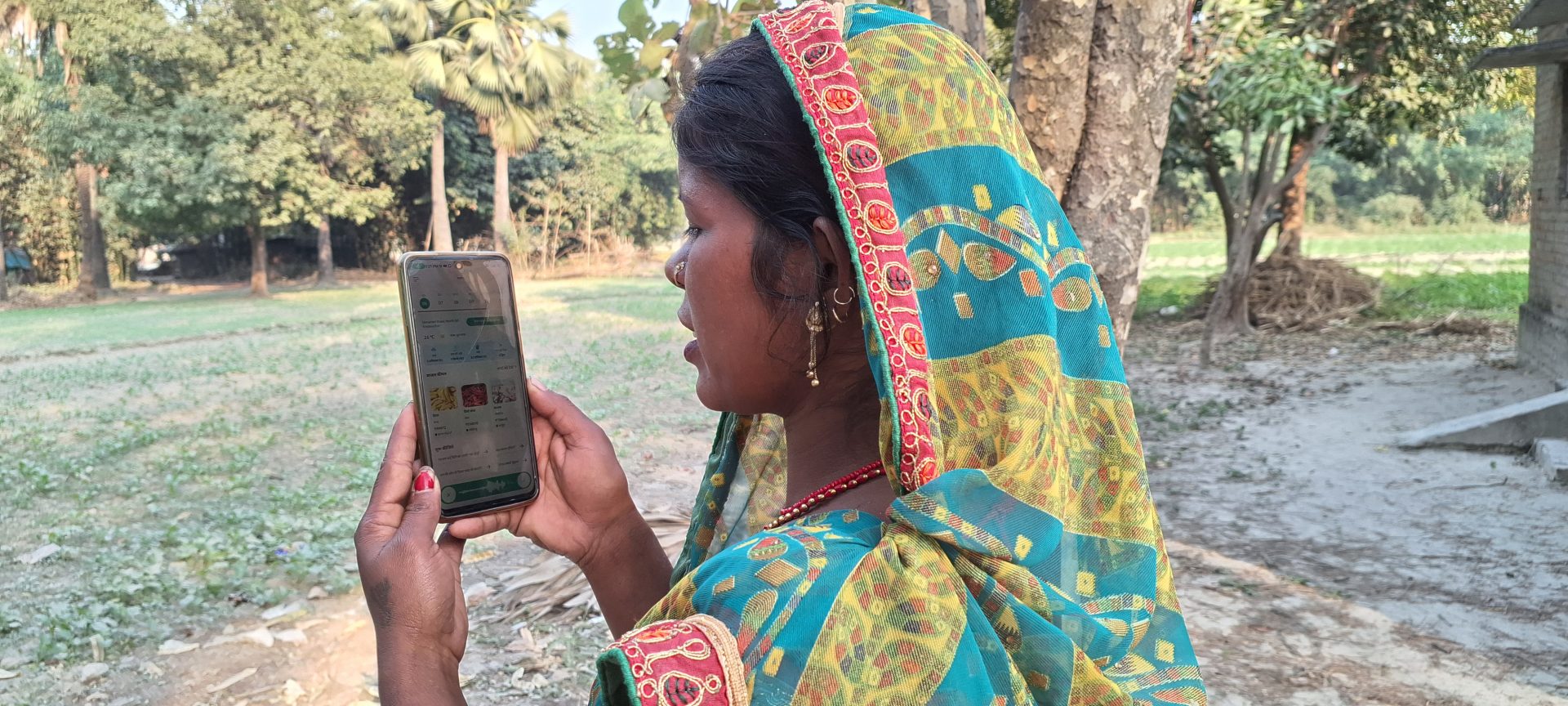
Cultivating the Future: How Digital Green and OpenAI are Empowering Farmers with FarmerChat

At Digital Green, we believe the best information for a farmer comes from another farmer. Since 2008, we’ve used technology to scale that community wisdom. Today, our partnership with OpenAI has reached a new milestone: FarmerChat, an AI-powered assistant delivering real-time, localized advice to over 1 million users across India, Kenya, Ethiopia, Nigeria, and Brazil.

The Tech Behind the Harvest: Powered by OpenAI

The partnership between Digital Green and OpenAI isn’t just a technical milestone; it’s an economic breakthrough. By fine-tuning efficient models like GPT-4o Mini rather than relying solely on massive frontier models, we provide high-quality, consistent responses while slashing infrastructure costs. This ensures the long-term sustainability of the platform.

“FarmerChat is making it easier and less expensive for agricultural extension agents to provide smallholder farmers in India with timely, accurate data about where to grow specific crops and how to protect them from drought and disease,” said Anna Makanju, Vice President of Global Affairs at OpenAI.

We aren’t just building an app; we are embedding FarmerChat into the very fabric of public extension services and telecom networks. The results of a 2025 impact study conducted by 60 Decibels show that this approach is working:

  • Actionable Advice: 70% of farmers reported applying FarmerChat’s recommendations on their farms within 30 days.
  • Closing the Gap: 73% of users are accessing digital advisory services for the first time, democratizing knowledge that was previously out of reach.
  • Local Success: In regions like Madhya Pradesh, India, farmers have successfully pivoted to organic pest control, leading to healthier soil and higher yields.

By combining the reasoning power of OpenAI with our deep-rooted community partnerships, we are helping farmers build resilience against a changing climate—one query at a time.

Radical Efficiency, Real Impact

The partnership isn’t just a technical success; it’s an economic one. By fine-tuning smaller, highly efficient OpenAI models instead of relying solely on massive frontier models, we’re able to provide consistently high quality responses and reduce infrastructure costs, ensuring long term sustainability.

“FarmerChat is making it easier and less expensive for agricultural extension agents to provide smallholder farmers in India with timely, accurate data about where to grow specific crops and how to protect them from drought and disease,” said Anna Makanju, Vice President of Global Affairs at OpenAI.

By embedding FarmerChat in public extension workflows, partnering with telecom networks, and building a robust community of field level partners, we’re 

The Future: From Advisory to Agency

Our journey with OpenAI is just beginning. We are currently preparing to integrate OpenAI’s Operator, an advanced AI agent, into FarmerChat.

This will transform FarmerChat from a tool that gives advice into a partner that takes action. Soon, a farmer won’t just learn about the best fertilizer; FarmerChat will be able to compare local prices and facilitate the purchase directly, bridging the final gap between knowledge and the field.

As our CEO Rikin Gandhi says: “The goal is for FarmerChat to become a true partner—understanding individual farmers and connecting them to local solutions in real time.”
From Tradition to Transformation: An Ethiopian Farming Family’s Path to Sustainability

In the lush landscape of Homacho Chawa kebele, Sidama, Ethiopia. Birhanu Kansara and his wife, Zenu Mokona, are rewriting their farming story. As parents to a young daughter, they once relied solely on traditional practices and methods passed down through generations, but these were limited in their ability to boost productivity or income. Despite their tireless effort, the farm’s potential remained untapped, and securing a brighter future felt uncertain.

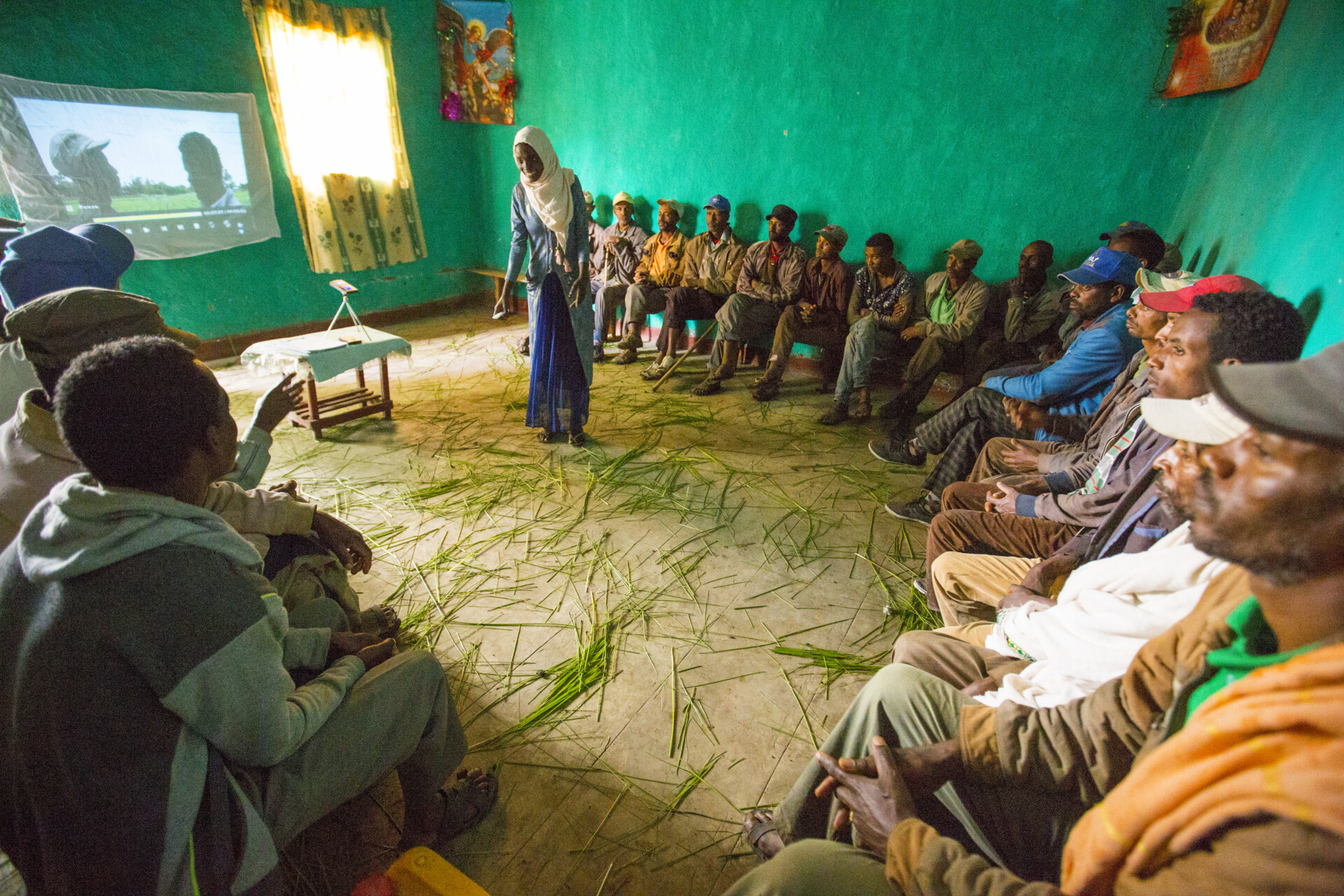
That changed when the couple joined a series of video-enabled training sessions organized in their community. Through these locally delivered videos, they were introduced to modern, practical techniques that made sense for smallholder farmers like them. Among the most valuable lessons were:

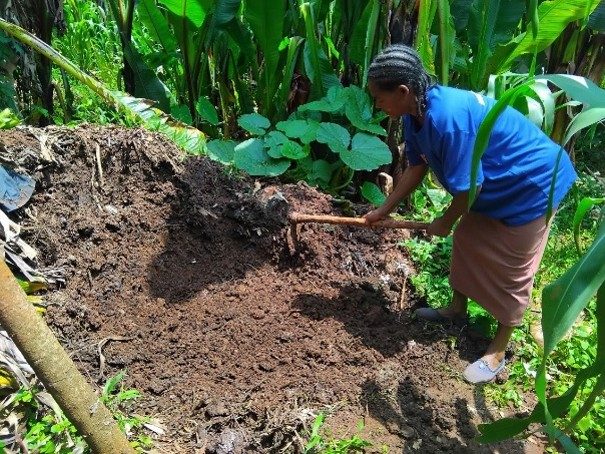
  • Preparing nutrient-rich compost to enrich soil naturally
  • Proper pit preparation and planting for avocado saplings
  • Grafting techniques to grow improved avocado varieties
  • Better harvesting and post-harvest handling practices to increase profits

The sessions didn’t just give them new information; they gave them a spark of confidence and the tools to act.

Back on their farm, Birhanu and Zenu immediately began applying what they learned. Side by side, they prepared compost, planted improved avocado varieties, and shifted their daily practices toward more sustainable approaches. The couple’s unity in learning and action marked the beginning of a transformation.

Today, change is visible across their land. The soil is healthier, their young avocado seedlings are thriving, and their outlook has shifted from uncertainty to optimism. While the full harvest is still ahead, they’ve laid the groundwork for abundance—not only for their family’s income but also for their community, where neighbors are already taking note of their progress.

We used to farm the way our parents did because it was all we knew,” Birhanu reflects. “Now, with new knowledge, we feel prepared for the future.

Birhanu and Zenu’s journey shows how targeted training and a willingness to adapt can unlock lasting success. They are not only building a more profitable farm but also creating a sustainable legacy for their daughter and setting an example of resilience and innovation for others in Aleta Wondo.

Cultivating Knowledge: Bridging Agriculture, Technology and Indigenous Wisdom

As we observed International Indigenous Languages Day this week, we reflected on the unique intersection of language, agriculture, and technology and how these elements combine to support farmers around the world, particularly in culturally rich regions like Ethiopia. Farming embodies a heritage interwoven with the cultural and linguistic fabric of communities. Recognizing this, Digital Green champions the use of indigenous languages in delivering agricultural advice. This approach not only respects but also revitalizes the deep-rooted connections between traditional practices and contemporary farming wisdom.

Improving Access and Adoption with Local Language and Videos

Language barriers can significantly hinder access to vital agricultural information. By offering advisories in the local languages of farmers, these barriers can be removed, paving the way for a more inclusive and accessible exchange of knowledge. Digital Green’s commitment to this cause is evident in our extension services, available in over 24 local Ethiopian languages. 

By delivering advice in the indigenous languages and dialects of a variety of regions, we provide farmers with advice that’s not only linguistically accessible but also contextually relevant. Utilizing video-based extension services, we bring agricultural practices to life in the most relatable way possible — in the farmers’ own languages. This method not only improves comprehension but also fosters a sense of belonging and community among farmers. They can see and hear practices in action, narrated in the familiar cadence of their mother tongue by a local farmer they already know, which significantly boosts the chances of these practices being adopted successfully.

A Prosperous Future for All Farmers, No Matter the Language 

Beyond video, Digital Green employs a variety of technological solutions like an AI assistant, mobile apps, voice messages, and interactive platforms, all adaptable to deliver content in indigenous languages. This ensures that crucial advisories reach farmers everywhere, even in areas where internet access might be sporadic.

Our vision at Digital Green is to create a future where every farmer, no matter their language, has the knowledge and resources to thrive. By honoring linguistic diversity, we’re not just sharing agricultural advice; we’re nurturing a global community of informed, connected, and empowered farmers. Let’s celebrate language’s vital role in preserving cultural heritage, fostering community, and advancing sustainable agriculture.